📖 Using Multi-Sensory Phonics Activities for Summer Learning
6 min read · 20 Jun 2026
Summer brings a shift in energy. Between family trips, outdoor play, and the freedom from structured school days, children are often moving more and sitting less. For parents, this creates a unique challenge: how do we maintain the reading momentum built during the school year without it feeling like a chore?
At ReadAide, we believe that learning to read shouldn't fight against a child's natural desire to move. By combining high-energy physical play with focused digital practice, we can prevent cognitive fatigue and make phonics a natural part of summer fun. This approach, known as multi-sensory learning, uses touch, movement, and sound to lock in phonetic concepts.
Why Multi-Sensory Phonics Activities for Summer Work
When a child engages their whole body, they are creating more neural pathways to help them remember information. If a child only sees a letter on a screen, they are using their visual processing. However, if they hear the sound, see the letter, and then physically draw it in a tray of sand, they are using visual, auditory, and kinesthetic pathways simultaneously.
This is particularly helpful during the summer months when children might have shorter attention spans for traditional table-work. By blending 'heavy work'—activities that push or pull against the body—with digital tools, we ground the learning experience. These activities help regulate a child's nervous system, making it easier for them to focus when it is time to use their [interactive alphabet](/alphabet).
Grounding Digital Practice with Physical Play
Our founder, Ann Ives, often suggests the 'Learn, Do, Play' cycle. Spend a few minutes on the ReadAide [dashboard](/dashboard) to introduce a specific sound or phonics rule, then immediately transition into a physical activity that mirrors that lesson.
Sidewalk Chalk Sound Jumping
One of the simplest ways to practice multi-sensory phonics activities for summer is using a pack of sidewalk chalk. Draw large circles on the pavement, each containing a different letter or phonogram your child has been working on in ReadAide.
Call out a sound—not the letter name—and have your child jump, skip, or hop to the matching circle. The impact of landing on the ground provides proprioceptive input that helps the brain focus. For more advanced learners, write out full CVC words like 'cat', 'pig', and 'sun'. When you call out a word, they must jump to each letter in order to 'build' the word physically.
Sand and Salt Trays
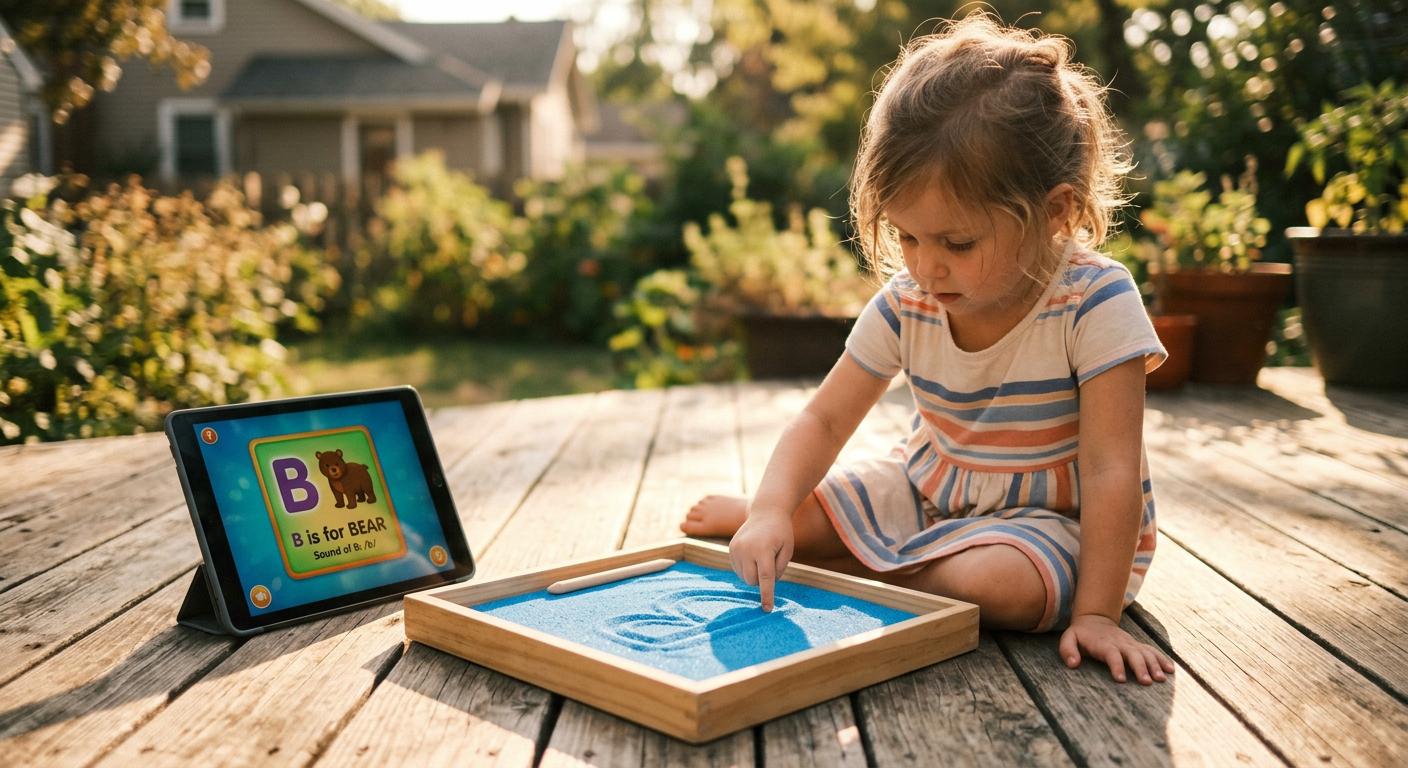
If the heat is too intense for outdoor play, move the sensory experience to the kitchen table. Fill a shallow tray with kinetic sand, salt, or even dried sprinkles. As your child navigates the [alphabet interactives](/alphabet) on their tablet, have them stop and trace the letter form into the sand tray using their index finger.
This tactile feedback is essential for children who struggle with letter reversals or those who are in the early stages of handwriting. It allows them to feel the shape of the letter, connecting the digital image to a physical sensation.
Preventing Cognitive Fatigue
Cognitive fatigue happens when a child's brain is overworked by one type of stimulation. Digital learning is highly effective, but it is best used in short, focused bursts. A fifteen-minute session on ReadAide is often more productive than an hour-long session if it is preceded and followed by physical movement.
To keep summer learning sustainable, consider these tips:
Transitioning Back to the Screen
After a child has engaged in heavy physical work, they are often in a 'ready to learn' state. Their sensory system has been satiated, and they are more likely to sit still and engage deeply with the reading material. This is the perfect time to open the ReadAide AI story generator or work through a new level in the curriculum.
If you are looking for a structured path to guide your child's summer reading journey, explore our [pricing plans](/pricing) to find the right fit for your family. We offer tools that adapt to your child's pace, ensuring that they stay challenged but never frustrated.
Making it a Family Habit
Multi-sensory phonics activities for summer don't require expensive kits or complex planning. Most of what you need is likely already in your garage or kitchen pantry. The goal is to show your child that reading is not just something found in a book or on a screen—it is a tool they can use to interact with the whole world.
By respecting your child's need for movement and providing them with evidence-based digital tools, you are setting them up for a successful return to the classroom in the fall. You aren't just preventing the 'summer slide'; you are building a foundation of confidence and curiosity that will last a lifetime.
Ready to start your child's reading journey? 🚀
Try ReadAide free with select lessons.
Get Started Free